
The call of the wild is hard to ignore, but heading into the backcountry without the right gear is a recipe for a miserable weekend. Whether you are scaling a jagged peak or meandering through a temperate forest, your clothing is your first line of defense against the elements. Choosing the right men’s trekking clothes isn’t just about looking the part; it’s about thermal regulation, moisture management, and physical protection from the terrain.
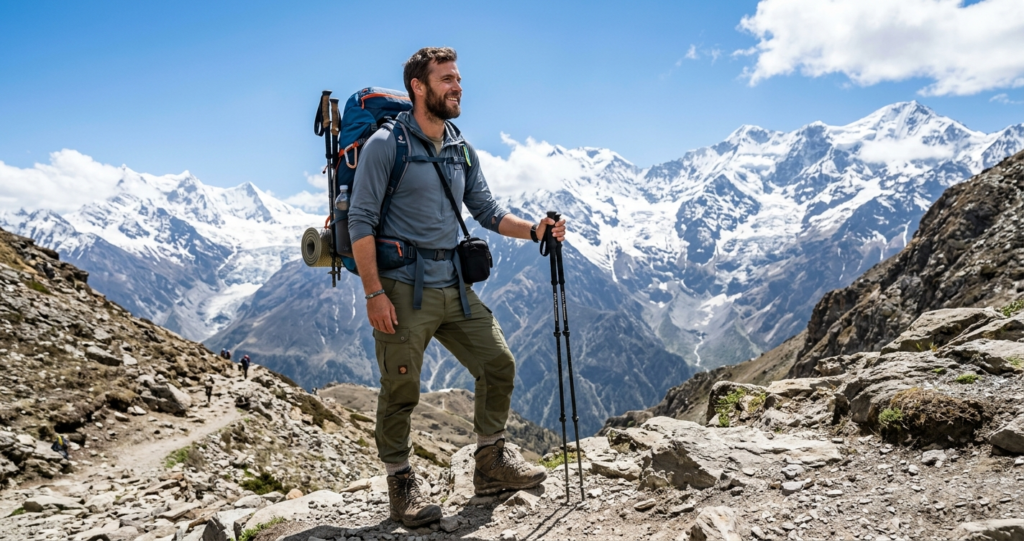
Before we dive into the technical specifics of fabrics and fit, let’s take a look at the modern aesthetic of the trail. The following image captures the essence of a well-equipped trekker ready to face unpredictable mountain weather with confidence.
Modern outdoor apparel has evolved far beyond heavy flannels and stiff denim. Today, high-performance gear utilizes synthetic blends and natural wools to ensure you stay dry even when the climb gets steep and the sweat starts to pour.
Table of Contents
- The Science of the Three-Layer System
- Base Layers: Your Second Skin
- Mid-Layers: Trapping the Warmth
- Outer Shells: Defying the Elements
- Trekking Pants and Lower Body Gear
- Specialized Apparel for Different Climates
- Essential Accessories for Every Trek
- Maintenance Tips for Longevity
The Science of the Three-Layer System
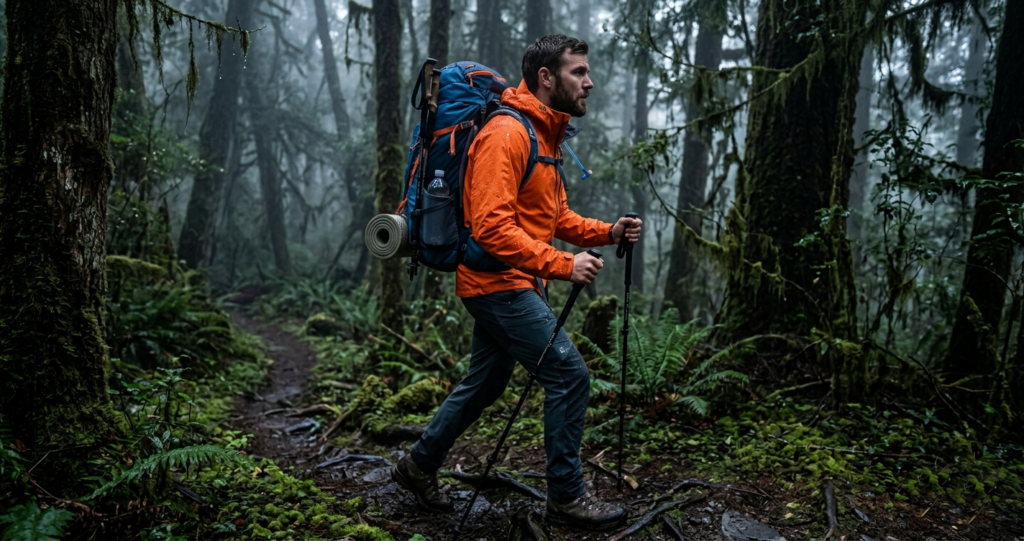
Understanding how to layer men’s trekking clothes is the most important skill an adventurer can possess. The goal is to create a microclimate around your body that can be adjusted as your heart rate or the weather changes. If you wear one heavy coat, you are either too hot or too cold, with no middle ground.
The three-layer system consists of a base layer, an insulating mid-layer, and a protective outer shell. This modular approach allows you to peel off layers during a grueling ascent and pile them back on when you reach a windy summit. It’s a strategy used by professional mountaineers and casual weekend warriors alike.
Base Layers: Your Second Skin
The base layer is the foundation of your trekking outfit. Its primary job is “wicking,” which means pulling moisture away from your skin and moving it to the outer surface of the fabric where it can evaporate. When you are active, your body cools down through sweating; however, if that sweat stays against your skin in cold altitudes, it can lead to discomfort or even chills.
Synthetic vs. Merino Wool
Most high-quality men’s trekking clothes use either polyester blends or Merino wool for base layers. Synthetics are incredibly durable and dry almost instantly, making them great for high-intensity scrambles. Merino wool is naturally odor-resistant and provides better temperature regulation over long trips.
Fit and Comfort
Your base layer should be snug but not restrictive. Look for “flat-lock” seams, which sit flat against the skin to prevent chafing under the weight of your backpack straps. Avoid cotton at all costs; it absorbs water, stays heavy, and loses all insulating properties when wet.
Mid-Layers: Trapping the Warmth
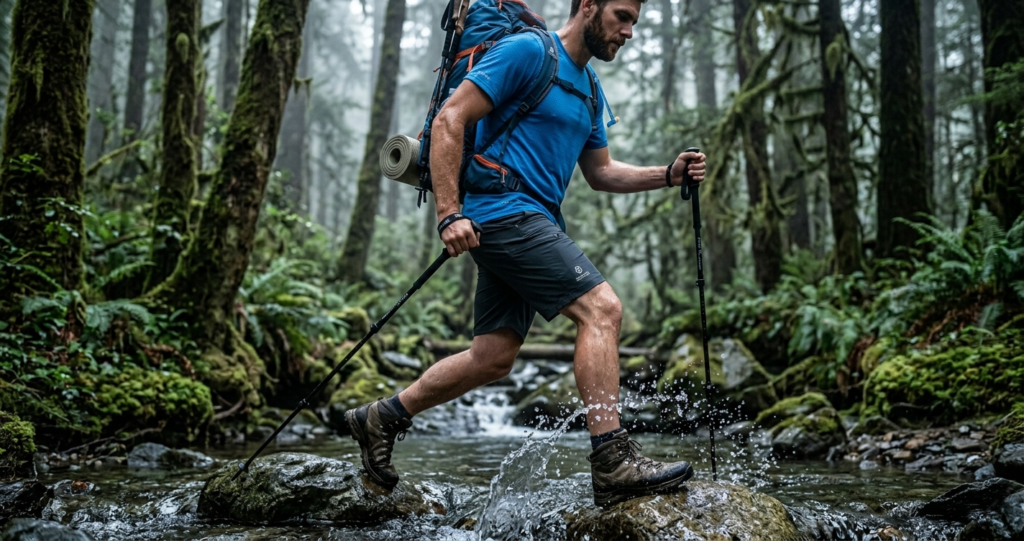
The mid-layer is where you find your insulation. This layer’s job is to trap the heat your body produces while still allowing moisture vapor to pass through. When shopping for men’s trekking clothes, you will notice two main types of insulation: fleece and “puffy” jackets.
Fleece Options
Fleece is a staple of the trail because it is breathable and continues to insulate even if it gets slightly damp. It’s perfect for active movement in cool weather. Lightweight grid fleeces are particularly popular because they provide an excellent warmth-to-weight ratio.
Insulated Vests and Jackets
For colder environments, a down or synthetic insulated jacket is essential. Down is the gold standard for packability and warmth, but it loses its loft when wet. Synthetic insulation is a bit bulkier but much more reliable in damp, rainy climates.
Outer Shells: Defying the Elements
The outer layer, or “shell,” is what protects you from wind, rain, and snow. When choosing men’s trekking clothes for the outer layer, you need to decide between a “hardshell” and a “softshell.” Both have their place depending on the forecast.
Hardshell Protection
A hardshell is your waterproof armor. These jackets use membranes like Gore-Tex to block liquid water from entering while allowing internal steam to escape. Look for features like “pit zips” to help dump heat quickly without taking the jacket off.
Softshell Versatility
Softshells are highly breathable and wind-resistant but only water-resistant. If you aren’t expecting a downpour, a softshell is often more comfortable because it stretches and moves with your body much better than a rigid hardshell.
Trekking Pants and Lower Body Gear
Your legs do the majority of the work, so your pants need to be tough yet flexible. Modern trekking pants have replaced old-school heavy trousers with lightweight, four-way stretch materials that allow for a full range of motion when climbing over logs or boulders.
Durability and Reinforcement
High-quality trekking pants often feature reinforced fabric on the knees and the seat. These are the areas most prone to abrasion when you are sitting on rocks or kneeling to set up a tent. Many also come with a DWR (Durable Water Repellent) coating to shed light rain.
Convertible vs. Standard Pants
Some trekkers prefer convertible pants that zip off into shorts. While highly functional for changing temperatures, some find the extra zippers bulky. A good alternative is a “roll-up” pant with a button tab to secure the hem at the calf.
Specialized Apparel for Different Climates
Different environments require different types of men’s trekking clothes. If you are trekking in the desert, you need high UPF (Ultraviolet Protection Factor) ratings and maximum ventilation. Look for sun hoodies that provide head-to-waist coverage without trapping heat.
In tropical environments, quick-dry fabrics are non-negotiable. Humidity prevents sweat from evaporating easily, so clothes that move moisture rapidly are vital for preventing skin irritation. Anti-insect treatments embedded in the fabric can also be a lifesaver in buggy areas.
Essential Accessories for Every Trek
No collection of men’s trekking clothes is complete without the right accessories. Your extremities—hands, head, and feet—are often the first places to feel the bite of the cold or the burn of the sun.
Headwear and Gloves
A wide-brimmed hat is essential for sun protection, while a lightweight beanie can keep you warm when the sun goes down. For your hands, lightweight liner gloves are great for preventing windburn without sacrificing dexterity.
Performance Socks
Never underestimate the power of a good pair of socks. Wool-blend hiking socks provide cushioning and moisture management that prevents blisters. Always carry a spare pair in your pack to keep your feet dry in case of a stream crossing mishap.
Maintenance Tips for Longevity
Trekking gear is an investment, and proper care will make it last for years. Technical fabrics require specific washing instructions. Never use regular fabric softeners, as they can clog the pores of breathable membranes and strip away water-repellent coatings.
Instead, use specialized technical washes designed for outdoor gear. Always air-dry your clothes when possible, though a short stint in a dryer on low heat can actually help “reactivate” the DWR coating on your jackets and pants. By taking care of your men’s trekking clothes, you ensure they are ready for your next big adventure.