
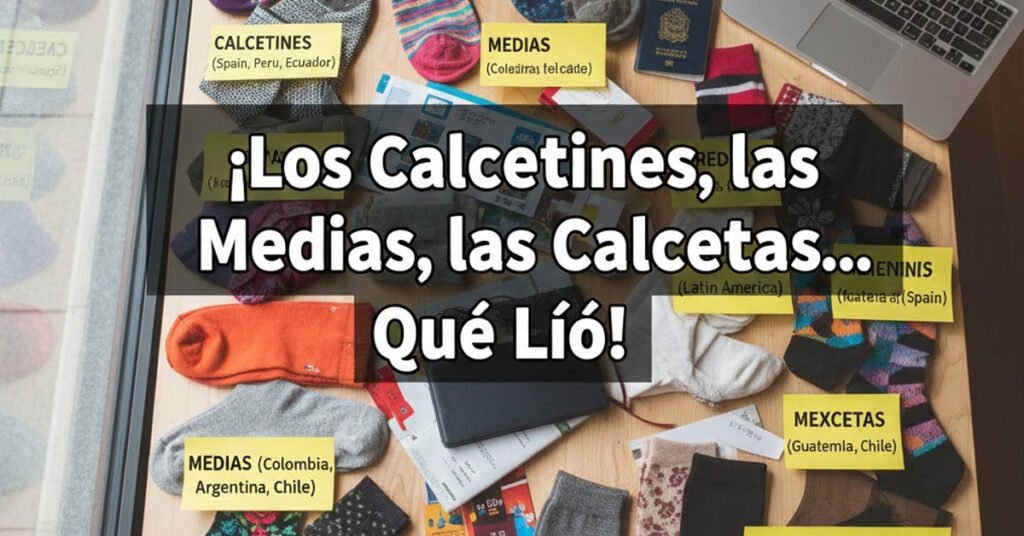
Learning a new language is often a journey of discovery, where the simplest objects can reveal fascinating regional differences. Take the humble piece of hosiery that covers your foot: how to say socks in Spanish is not a single, universal answer. Depending on whether you are chatting with a local in Madrid, Mexico City, or Medellín, the correct, everyday term can change dramatically. What is standard in one country might sound formal or even refer to a completely different garment in another. Understanding this linguistic variety is crucial not only for accurate communication but also for connecting more deeply with the local culture and avoiding awkward translation moments.
The complexity of saying socks in Spanish perfectly reflects the rich diversity of the Spanish-speaking world, which spans over 20 countries. While many words, like mesa (table) or agua (water), are universally understood, others, particularly those describing everyday clothing items, have evolved independently due to colonization, indigenous influences, and the natural drift of language. This guide will walk you through the most common and essential terms for socks and related hosiery, ensuring your Spanish vocabulary is accurate and regionally appropriate.
The Core Terms for Socks in Spanish
While there are many regional variations, three main terms dominate the conversation when describing footwear that covers the foot and ankle.
1. Calcetines: The Universal and Formal Choice
The most widely accepted and universally understood word for socks in Spanish is calcetines (plural) or calcetín (singular).
- Usage: Calcetines is the standard term used in Spain and is generally understood across all of Latin America. It typically refers to what English speakers call a regular sock: anything from ankle socks to crew socks.
- Formality: This term is considered the neutral, grammatically correct, and formal word. If you are unsure which regional term to use, calcetines is always a safe choice.
- Example: “Necesito comprar un par de calcetines nuevos para el gimnasio.” (I need to buy a pair of new socks for the gym.)
2. Medias: A Regional and Confusing Term
Here is where the confusion begins, as the term medias (plural) or media (singular) has multiple meanings, depending on the country.
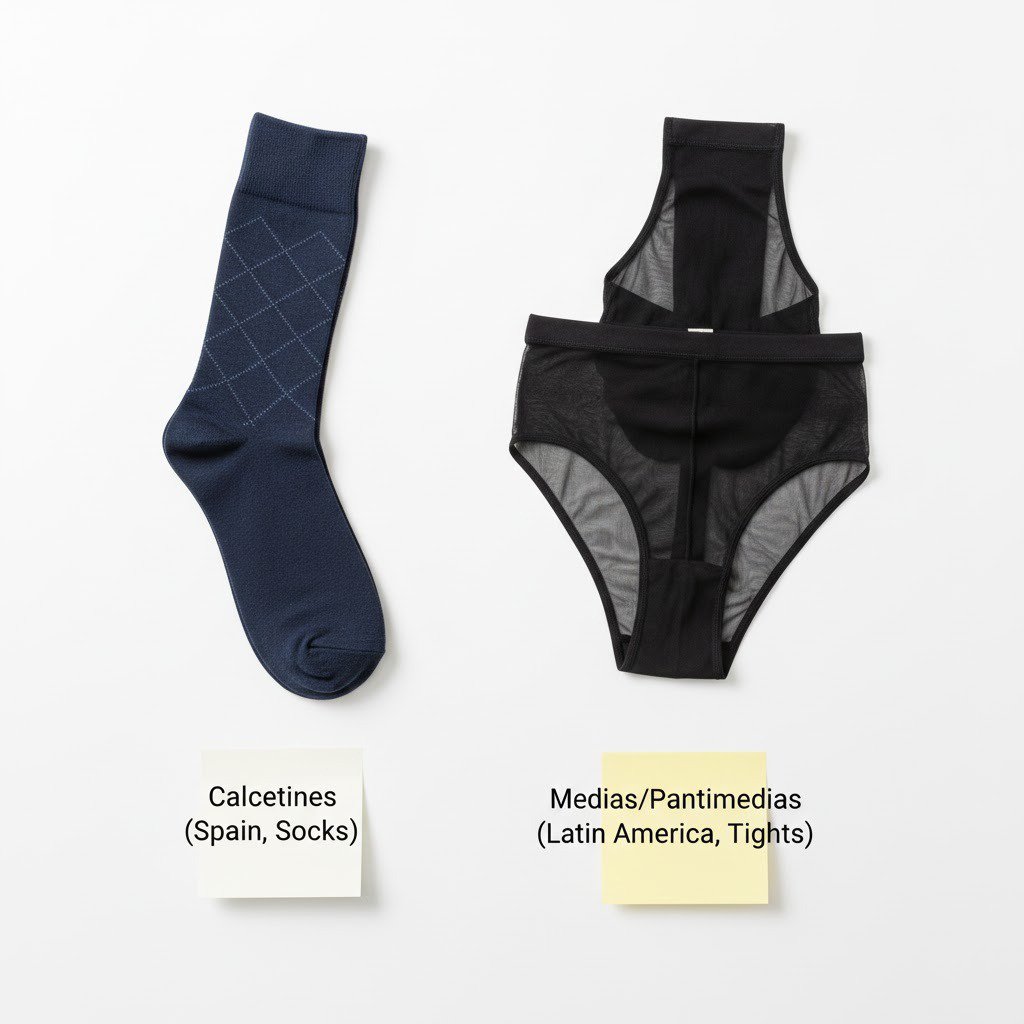
- Spain & Southern Cone (Argentina, Chile, etc.): In these regions, medias almost exclusively refers to women’s hosiery: tights, stockings, or pantyhose (pantimedias is also used). It rarely refers to the thick, everyday sock.
- Andean Region (Colombia, Ecuador, Peru) & Central America: In contrast, in countries like Colombia, medias is the common, everyday term for regular socks (calcetines).
- The Problem: This term is the source of the most confusion. If you ask for medias in Spain, you will likely be directed to the women’s hosiery aisle, whereas in Colombia, you’ll find the general sock display. This highlights the important calcetines vs medias difference you must grasp.
3. Calcetas: Popular in Mexico and Central America
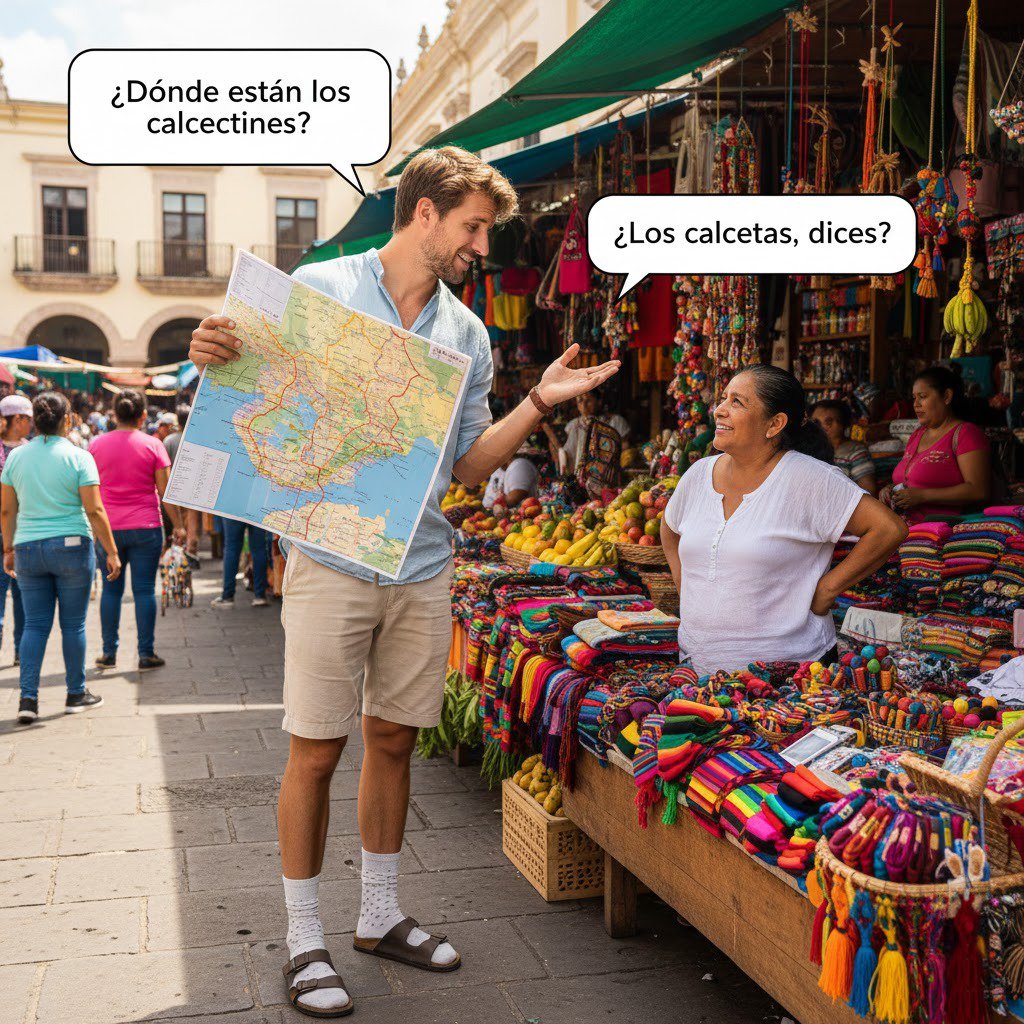
Calcetas (plural) or calceta (singular) is another common variation, particularly popular in Mexico and parts of Central America.
- Usage: Calcetas typically refers to a longer, thicker sock, often reaching mid-calf or knee-high. It is a very common word in conversation when discussing athletic or school uniform socks.
- Example (Mexico): “¿Dónde están mis calcetas de fútbol?” (Where are my soccer socks?)
Addressing Related Hosiery and Vocabulary
When you need to be more specific about the length or type of sock, specialized terms are necessary. This is especially true when discussing spanish word for tights and stockings.
Specific Hosiery Terms
- Medias de nylon / Pantimedias: These are the clearest, most universal terms for tights or pantyhose worn by women. Pantimedias is a compound word meaning “trousers/pants + stockings.”
- Calcetines de tobillo: The explicit term for ankle socks or low-cut socks.
- Medias a la rodilla / Calcetas largas: Terms used to specify knee-high socks. Medias a la rodilla is common in many regions, but calcetas largas is clear in Mexico.
- Calcetines de deporte / Calcetines deportivos: Clearly describes athletic or sports socks.
Regional Breakdown: What are the Different Words for Socks in Mexico and Beyond?
To truly master this essential vocabulary, it’s helpful to break down the preferred terms by major geographical region. This information is vital for travelers, language learners, and businesses dealing with Spanish-speaking markets.
| Region | Primary Everyday Term for Socks | Term for Tights/Stockings |
| Spain | Calcetines | Medias, Pantimedias |
| Mexico | Calcetines (General), Calcetas (Knee/Long) | Medias (less common), Pantimedias |
| Colombia/Ecuador/Peru (Andean) | Medias | Medias veladas, Pantimedias |
| Argentina/Chile (Southern Cone) | Calcetines | Medias (very common), Pantimedias |
| Puerto Rico/Cuba (Caribbean) | Calcetines | Medias (for sheer hosiery) |
What are the Different Words for Socks in Mexico?
In Mexico, you will primarily hear calcetines for the standard crew sock. However, calcetas is the dominant word when referring to any sock that goes past the ankle, such as school uniform socks, athletic socks, or thick winter socks. While the term medias is understood, it is generally reserved for thin, women’s hosiery. Understanding the distinction between calcetines and calcetas is key to sounding authentic.
Practical Tips for Using Socks in Spanish During Travel
When traveling or engaging in conversation, confusion over the word for socks in Spanish is incredibly common. Here are two practical tips to navigate the linguistic landscape:
1. Always Specify the Context
If you are in a country where medias can mean either socks or tights (like Colombia), add a descriptive adjective. Instead of just asking for medias, you might ask for medias gruesas (thick socks) or calcetines cortos (short socks). Adding detail helps clarify your intent regardless of the regional term.
2. Listen to the Local Term
The most important rule in language learning is to mimic the locals. When you arrive in a new country or region, listen carefully to what the shopkeeper or your host family calls them. If they consistently say medias, adopt medias. If they say calcetines, use that. This not only improves your fluency but also shows respect for the local dialect.
Mastering how to say socks in Spanish is a small but essential step in your language journey. While calcetines will get you by almost anywhere, knowing the distinction between medias and calcetas and understanding their geographical context will elevate your Spanish from functional to fluent, helping you feel more comfortable and confident whether you’re shopping for new athletic gear or just describing your outfit.