
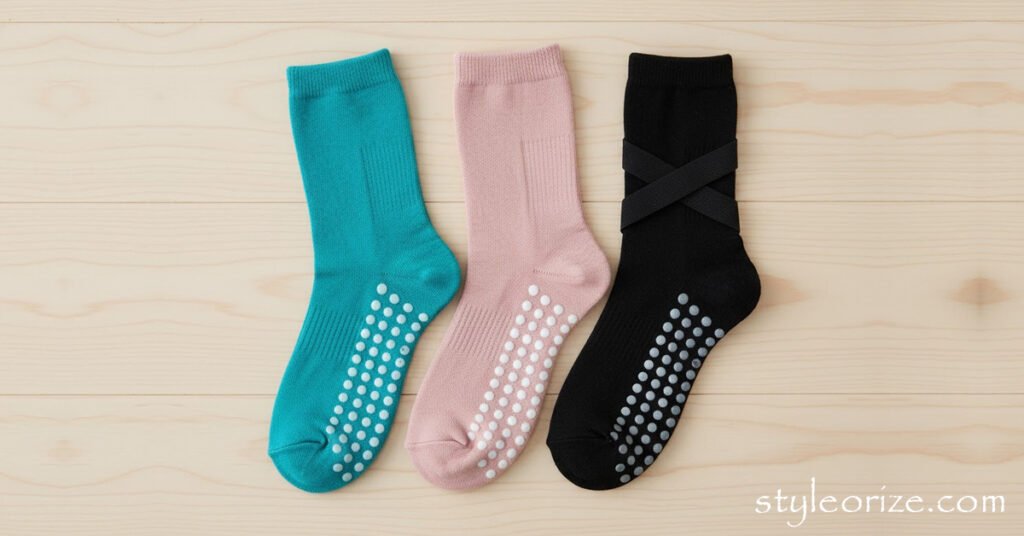
Pilates is built on a foundation of precision, control, and centered movement. Whether you are gliding on a reformer, stabilizing your core on a mat, or pushing off a tower, every movement demands an unwavering connection to the surface. This is where the simple yet indispensable piece of gear—the Pilates socks—transforms your workout. These are not your average athletic socks; they are specialized tools engineered to enhance stability, protect your alignment, and maintain studio hygiene. If you’ve ever felt your foot slip, bunch, or lose its connection during a challenging Hundred or Short Spine exercise, you understand the critical need for a secure grip.
The introduction of the anti-slip sole has made Pilates socks mandatory in many studios, and for good reason. They allow practitioners to focus entirely on muscle engagement and breath, rather than fighting to maintain traction. We will explore the definitive role these specialized socks play in your practice, breaking down their construction, the key differences between styles, and how they help you unlock your full potential on the mat and the machine.
The Three Pillars of Pilates Sock Performance
A high-quality pair of Pilates socks is designed to address the three primary concerns of any movement-based discipline: stability, hygiene, and alignment. These factors are interwoven to create a safer, more effective exercise experience.
H2: Unmatched Stability and Control
The defining feature of Pilates socks is the silicone or rubberized grip pattern embedded in the sole. This pattern is not just random dots; it is strategically placed to align with the foot’s major pressure points, ensuring maximum traction.
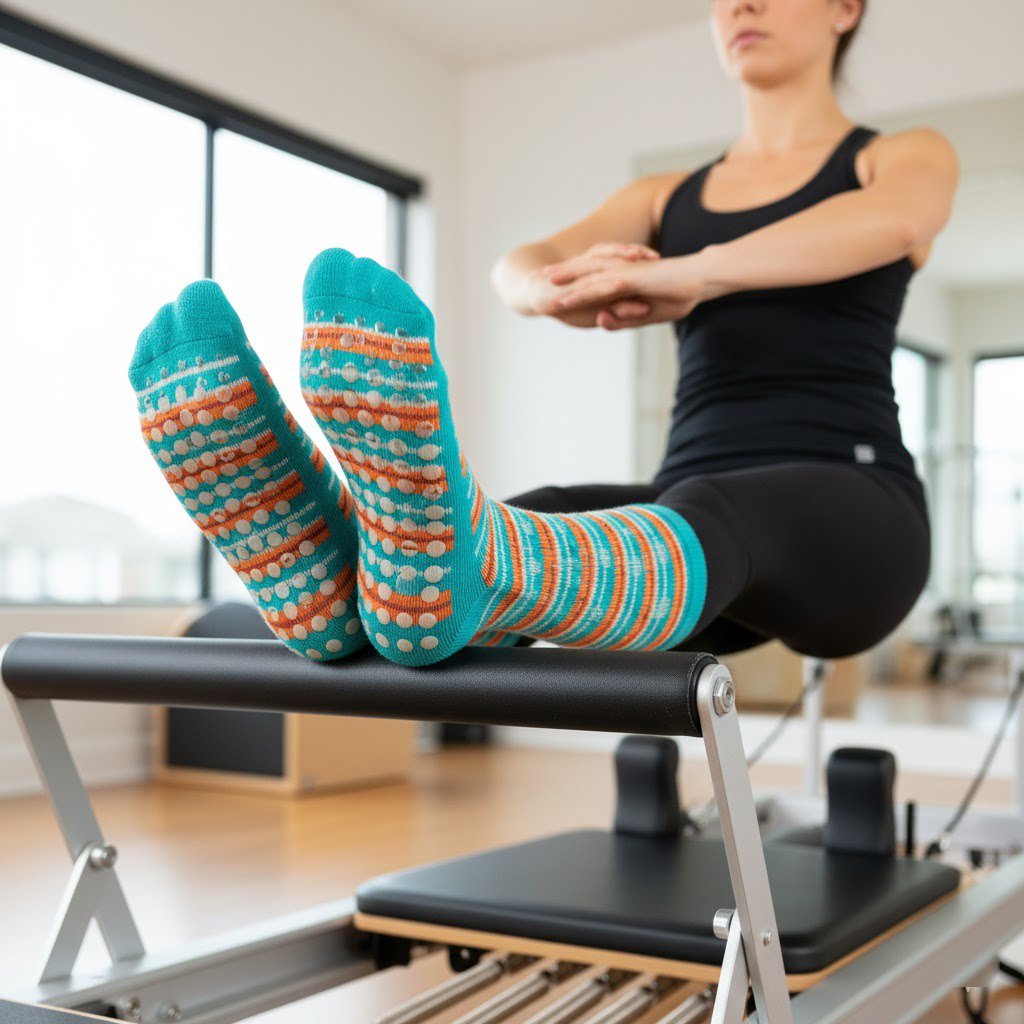
The non-slip grip is crucial for exercises performed on the moving carriage of a reformer, where the foot needs to be completely anchored to generate force and control the return movement. Without the grip, the foot slides, leading to wasted effort and, more importantly, a breakdown in the crucial mind-body connection. This enhanced stability ensures that the force you exert translates directly into muscle work, not just friction.
H3: Improved Alignment and Muscle Engagement
Because Pilates is a low-impact exercise focused on controlled articulation, proper foot alignment is paramount. The best Pilates socks often feature integrated arch compression. This gentle pressure band around the middle of the foot helps support the arch, promoting anatomically correct foot positioning.
When the foot is properly supported and stabilized, the body’s kinetic chain benefits—the knees, hips, and spine can achieve better alignment. This allows you to deepen the stretch and strengthen the muscles that truly need to be engaged, preventing the common tendency to grip with the toes or compensate with incorrect muscles.
H3: The Hygiene Barrier
In a shared studio environment, particularly on reformers, mats, or barre floors, hygiene is a key consideration. Pilates socks create a necessary barrier between your feet and the shared equipment.
High-quality socks are typically made from breathable, moisture-wicking materials like cotton blends, bamboo, or specialized synthetics. These materials help manage sweat, reducing dampness that can breed bacteria and fungi, making your workout not only safer from slips but also cleaner and more sanitary. Many studios mandate their use for this reason alone.
Choosing Your Style: Toeless vs. Full-Toe
The biggest choice when selecting Pilates socks comes down to whether you prefer toeless or full-toe designs, each offering distinct advantages for your practice.
Toeless Pilates Socks: The Barefoot Feel
Toeless (or half-toe) socks leave your toes exposed while providing the essential grip under the ball and heel of the foot.
- Pros: They offer maximum proprioception—your body’s sense of balance and spatial awareness. The ability to splay and “grab” the mat or reformer with your actual toes can feel more grounding and natural, appealing to those who prefer a barefoot sensation. They also offer excellent ventilation, making them popular for heated classes.
- Cons: Less coverage means less hygiene protection on the floor and slightly less warmth.
Full-Toe Pilates Socks: Enhanced Articulation
Full-toe socks encapsulate each toe individually, similar to a glove for the foot, and feature grip patterns across the entire sole.
- Pros: They are excellent for promoting and maintaining natural toe splay, encouraging better articulation during footwork and improving overall alignment. They offer maximum hygiene coverage and keep the foot warmer in cooler studios. Many practitioners find the toe separation crucial for developing foot dexterity.
- Cons: Some users find the individual toe pockets can feel restrictive or take slightly longer to put on, though this is often a matter of getting used to the fit.
Material and Fit: Factors That Define Quality
The effectiveness of Pilates socks is highly dependent on their construction and the fabric blend used. Investing in a premium pair ensures durability and maximum performance benefits.
The Best Fabric Blends
Look for socks made from breathable, soft, and durable combinations:
- Cotton, Nylon, and Spandex Blend: This is the most common and effective combination. Cotton provides softness and breathability; Nylon adds significant durability and helps the sock hold its shape; and Spandex (or Elastane) provides the necessary stretch and recovery, ensuring the sock hugs the foot tightly without bunching.
- Bamboo: Known for being exceptionally soft, sustainable, and possessing natural moisture-wicking properties, bamboo is a premium choice for sensitive skin and odor control.
Finding the Perfect Snug Fit
A loose-fitting sock defeats the purpose of the anti-slip grip. If the sock bunches, the grip is misaligned and can actually increase the risk of sliding.
- The sock must fit snugly, acting like a second skin around the arch and heel.
- Check the heel cup—it should be well-defined and cup the heel without sliding up or down during movement.
- The material should have excellent “recovery”—meaning it snaps back into shape after stretching, ensuring the sock maintains its tightness even after many washes.
Pilates Socks in Practice: Mat vs. Reformer
While both mat and reformer work require Pilates socks, their application slightly differs.
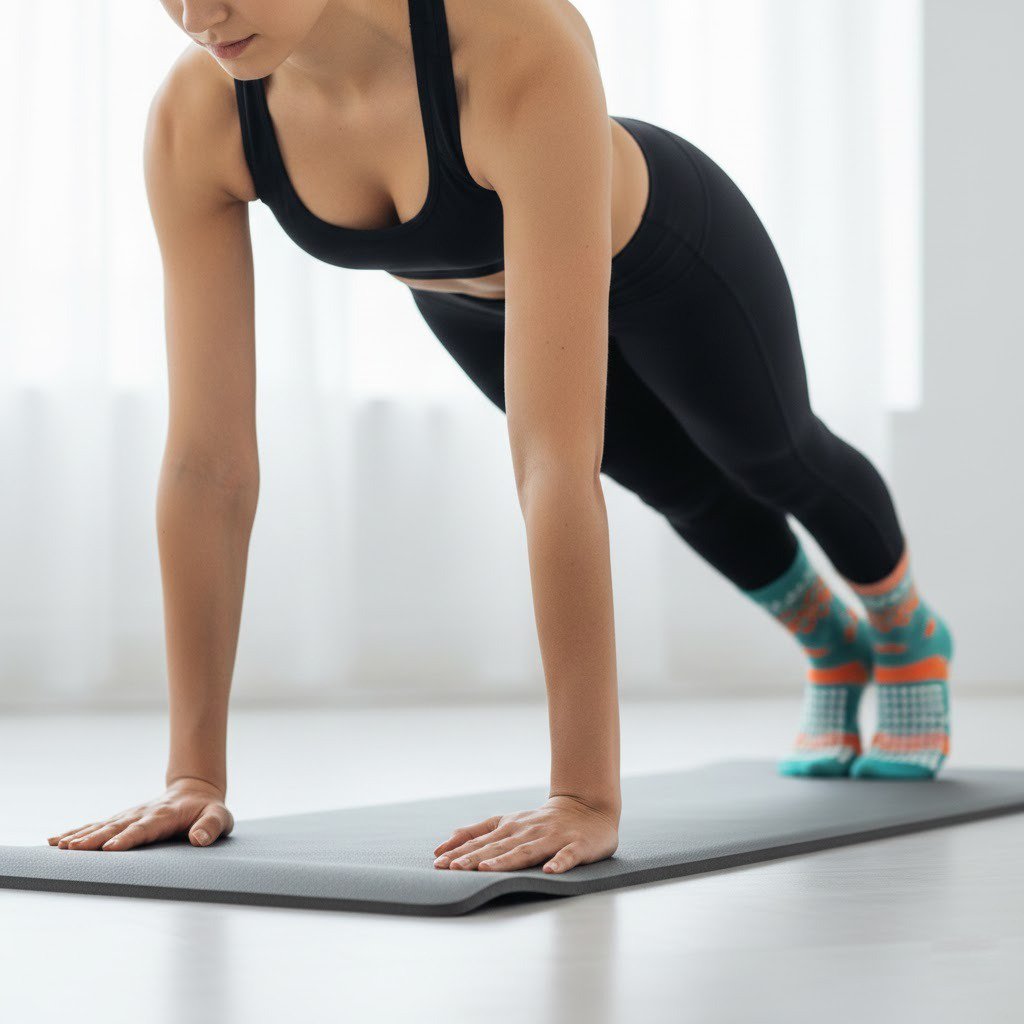
On the mat, the grip prevents lateral and forward/backward slipping during planks, push-ups, and balance exercises. The stability is focused purely on your connection to the floor.
On the reformer, the Pilates socks are essential for anchoring the foot to the footbar or the moving carriage, especially when performing high-load or high-repetition exercises. The stability they provide allows you to isolate the core and lower body muscles precisely, which is the heart of Joseph Pilates’ method. They prevent the foot from shifting its position mid-movement, allowing for cleaner, more focused repetitions and maximizing the benefit of the spring resistance.
In essence, Pilates socks are more than just an accessory; they are a fundamental piece of performance gear. They embody the Pilates principle of control by giving you a reliable, stable foundation, allowing you to execute every movement with the precision, alignment, and confidence the practice demands.