
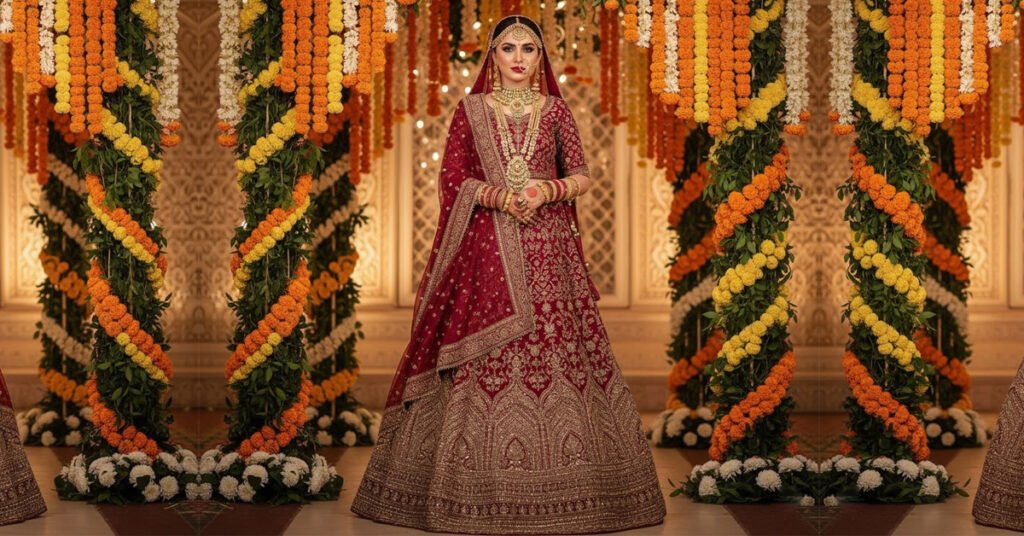
Pakistani weddings are a kaleidoscope of color, opulence, and intricate craftsmanship, where the clothing is as central to the celebration as the vows themselves. Choosing the right Pakistan dresses for wedding is a journey into rich textiles and centuries of tradition, blending stunning hand-embroidery with contemporary silhouettes. From the radiant bride to the elegant guests, every garment tells a story of cultural heritage and luxury.
This featured image captures the grandeur and traditional essence of a main wedding ceremony dress, showcasing the heavy embellishment and classic color palette often chosen by a Pakistani bride. The artistry involved in creating these garments is truly remarkable, setting the standard for all wedding attire.
💖 The Cornerstones of Pakistani Wedding Attire
Pakistan dresses for wedding are not a single style, but a vibrant collection of outfits, each traditionally linked to a specific wedding event. A typical Pakistani wedding is a multi-day affair, and the attire changes dramatically from the lively Mehndi to the formal Walima (Reception). Understanding these key silhouettes is the first step in mastering the wedding dress code.
The Regal Lehenga and Choli
The Lehenga remains the ultimate choice for the main wedding day (Barat). This three-piece ensemble features a heavily flared, floor-length skirt (Lehenga), paired with a short, fitted blouse (Choli) and a dupatta (scarf). The bridal version is almost always drenched in intricate handwork like Zardozi, Dabka, Kora, and Naqshi—techniques passed down through generations of artisans. It is the pinnacle of the Pakistani bridal silhouette, exuding unmatched grandeur.
The Elegant Sharara and Gharara
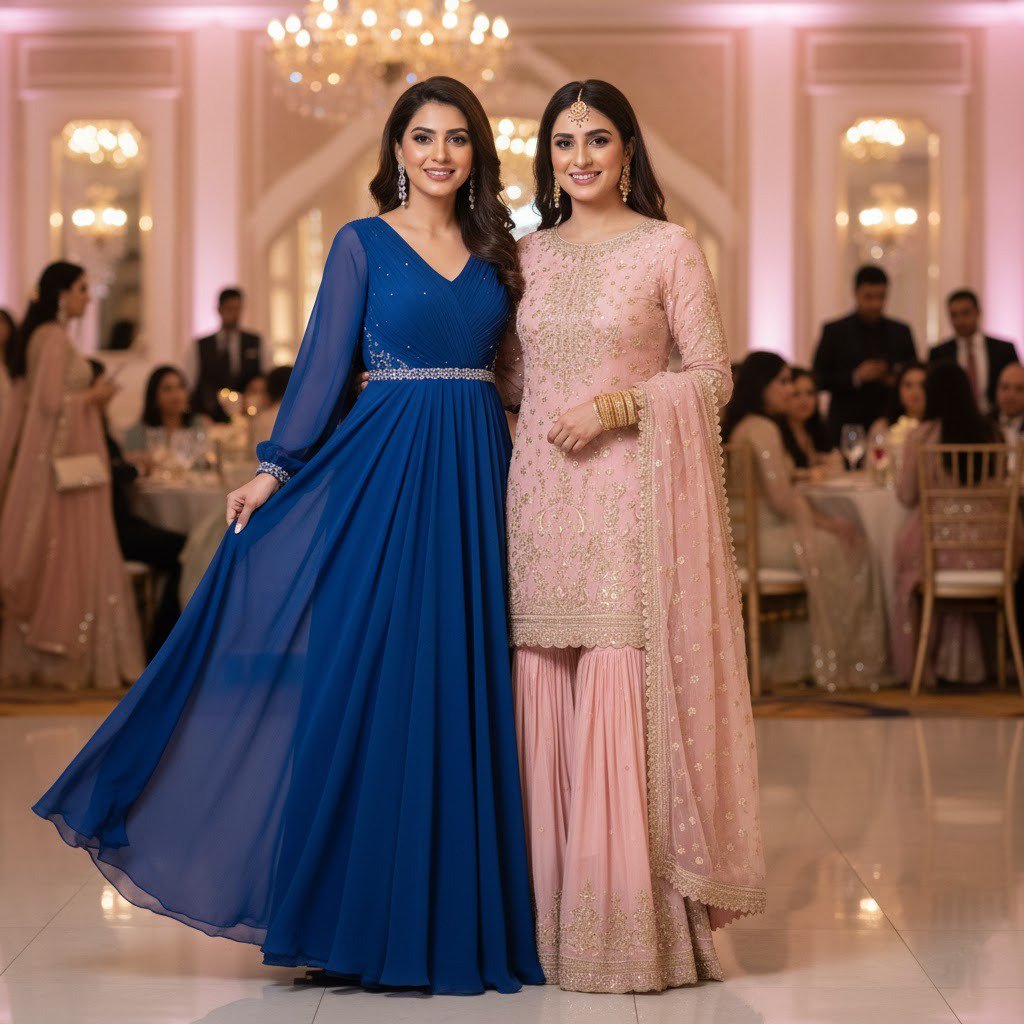
Often confused, the Sharara and Gharara are historical, wide-legged trouser styles. The Gharara is fitted from the waist to the knee, where a distinct, dramatic flare is added using a seam, making it look like a skirt. The Sharara flares out directly from the waist, offering a softer, flowing silhouette. Both are often paired with a short kurti (shirt) and are popular choices for the Mehndi or as elegant attire for wedding guests, providing a traditional yet festive look.
The Flowing Maxi and Anarkali
For the Walima (reception), many choose the modern elegance of a Maxi or Anarkali dress. The Maxi is a long, floor-length gown, typically made from luxurious, flowing fabrics like chiffon or net, and often features heavy embroidery along the hem and bodice. The Anarkali is a frock-style dress, characterized by a long, voluminous, frock-like top paired with a churidar pajama. Both offer a sophisticated, graceful look, often favored for their royal, princess-like feel.
🎨 Color Palettes and Event-Specific Themes
The function dictates the color palette, and Pakistani wedding functions are known for their distinct color requirements. This intentional use of color enhances the festive atmosphere of each event.
Mehndi: Vibrant and Playful Hues
The Mehndi ceremony is all about celebrating with color. The traditional color scheme is highly vibrant, centered around shades of mustard yellow, lime green, and hot pink. For this event, many choose bright Pakistan dresses for wedding guest attire in silk, raw silk, or cotton net, adorned with playful Gota work, mirror work, or light floral embroidery. It is the one day where the brighter the color, the better.
Barat: Traditional Reds and Golds
The Barat, the main wedding day, traditionally demands deep, classic colors from the bride. Deep red, crimson, or maroon are symbolic of love and prosperity and remain the most popular choices, heavily contrasted with opulent gold or silver embroidery. Guests usually opt for rich jewel tones—royal blue, emerald green, or deep violet—to complement the bride’s attire without overpowering it.
Walima (Reception): Subtlety and Pastels
The Walima often calls for a more muted, elegant, and contemporary color scheme, marking a transition from the vibrant traditional look. Brides often choose soft pastels like powder pink, icy blue, lavender, or sophisticated shades like ivory, champagne, or silver-grey. As a guest, a semi-formal outfit in a slightly deeper pastel or a rich metallic tone ensures a graceful and appropriate appearance.
This photograph highlights the beautiful juxtaposition of styles seen at a reception—a modern maxi alongside a traditional Gharara—all unified by a sophisticated, semi-formal aesthetic. Guest attire focuses on elegance and light-to-moderate embellishment, perfect for the Walima function.
✨ The Essence of Embellishment and Fabric
What truly distinguishes Pakistan dresses for wedding is the intricate handiwork and the use of luxurious fabrics that add depth and richness to every garment. The choice of fabric must complement the embroidery and the season.
Must-Know Embroidery Techniques
- Zardozi and Dabka: This is the most formal and luxurious work, involving heavy gold or silver metallic threads (Zardozi) and fine, coiled metal wires (Dabka). It’s primarily used on the bridal Lehenga and formal outfits.
- Tilla Work: A thread made of fine gold or silver wire, often used to create geometric or floral patterns with a shimmering, metallic finish.
- Gota Work: A type of appliqué where small pieces of metallic ribbon are sewn onto the fabric to create patterns. It is very popular for Mehndi and festive guest wear due to its light, celebratory feel.
- Resham: Colored silk threads used to create fine, intricate, and vibrant thread embroidery, adding a pop of color and texture to the design.
Seasonal Fabric Choices
The climate in Pakistan influences fabric selection, especially for formal attire.
- Silk and Raw Silk: The most preferred foundation for bridal wear and formal guest attire. Raw silk offers a slightly matte, rich texture perfect for holding heavy embroidery, while pure silk adds a luxurious sheen.
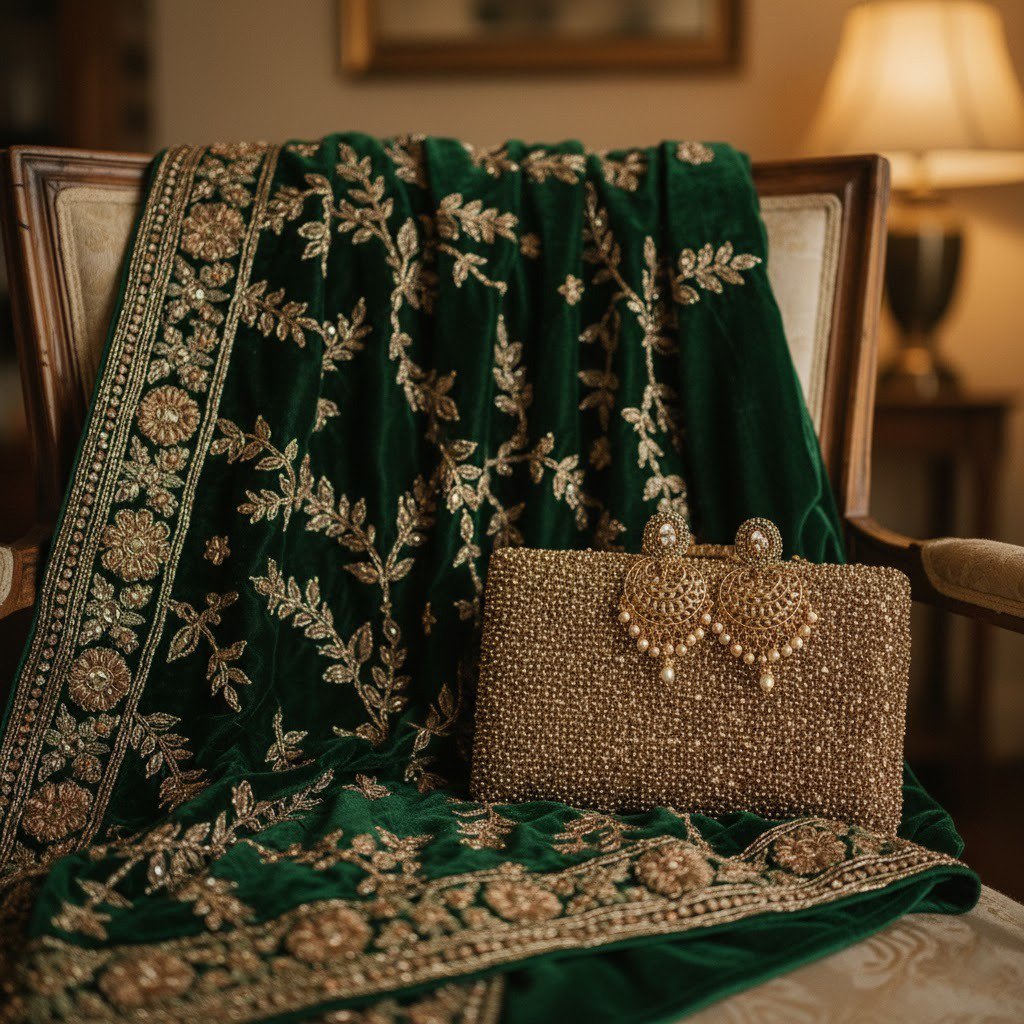
- Velvet: A favorite for winter weddings, velvet offers warmth and a deep, opulent texture that beautifully highlights metallic embroidery. It is often seen in shawls, blouses, or full suits.
- Chiffon and Net: These are lighter, flowing fabrics, ideal for Walima gowns, Sharara kurtis, and dupattas. They drape elegantly and allow for a graceful, sophisticated movement. Chiffon is popular for its sheer lightness, while net offers volume and a great base for heavy beadwork.
- Organza: A crisp, sheer fabric gaining immense popularity for dupattas and layered effects. It provides volume and structure without adding significant weight, perfect for a modern bridal or guest look.
💡 Styling Tips for Guests: Mastering the Look
As a wedding guest, your aim is to be stylish, respectful, and appropriately dressed for the function. Choosing the right Pakistan dresses for wedding attire is a balancing act.
Accessorizing with Impact
Traditional jewelry is paramount. For formal events, focus on statement pieces: a heavy Jhumka (earrings), a traditional choker or Rani Haar (long necklace), and a Maang Tikka or Matha Patti (forehead jewelry). For semi-formal events, one or two statement pieces—like bold earrings—are usually sufficient to avoid looking overly ornate.
Dupatta Draping
The dupatta is not just an accessory; it completes the outfit. For the Mehndi, a vibrant, lightly worked dupatta can be draped casually over one shoulder to allow for dancing. For the Barat or Walima, a more structured drape—pinned neatly over the head or draped across both arms—adds formality and grace to the ensemble. Ensure the embroidery on your dupatta complements the embroidery on your main dress.
Footwear and Comfort
While the dress is the star, comfortable yet elegant footwear is crucial for long wedding functions. Opt for embellished flats like Khussas or Juttis for the Mehndi and Sangeet, as they are traditional and perfect for dancing. For the Barat and Walima, choose sophisticated heels or embellished sandals that are comfortable enough to stand in for hours, ensuring you match the formality of your designer Pakistani dresses.
This close-up shot highlights the exquisite detail of traditional Pakistani craftsmanship, showing how accessories and luxurious textures like velvet contribute significantly to the overall formal wedding look, especially during cooler seasons.
Finding Your Perfect Ensemble
Whether you are seeking the perfect bridal lehenga or a beautiful Pakistan dresses for wedding guest outfit, the key is to choose an ensemble that speaks to both your personal style and the traditional elegance of the celebration. Focus on the quality of the fabric, the intricacy of the handwork, and the appropriateness of the color for the specific event. By following this guide to the key silhouettes and trends, you are sure to step into any Pakistani wedding radiating grace and cultural appreciation.
Pingback: Winter Wedding Dresses | Elegant, Warm, and Stylish Bridal & Guest Outfits