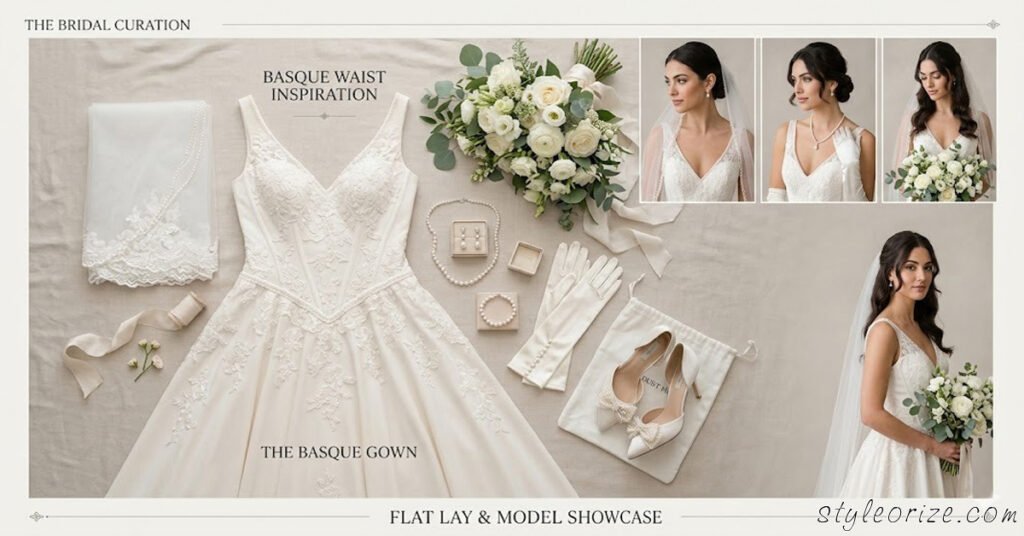
The world of bridal fashion is currently witnessing a magnificent revival of one of the most regal silhouettes in history: the basque waist wedding dress. This distinctive design, characterized by a bodice that extends past the natural waistline into a sharp “V” or “U” shape, offers a transformative effect that balances proportions while exuding an air of timeless elegance. Whether you are aiming for a Bridgerton-inspired royal aesthetic or a sleek, modern look, the basque waist is the secret to a snatched silhouette that feels both vintage and incredibly fresh.
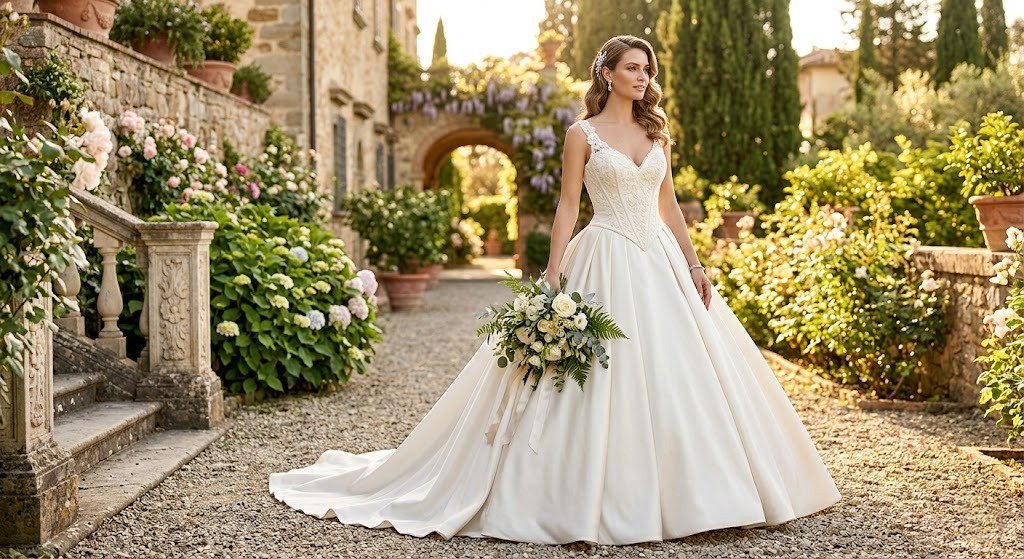
Below, we’ve curated a visual guide to help you envision this trend. Imagine a gown that doesn’t just sit on your hips but sculpts your frame with architectural precision. The first image in our journey showcases the classic intersection of a structured corset and a voluminous skirt, demonstrating exactly why this cut has remained a favorite among designers for centuries.
Table of Contents
- What Exactly is a Basque Waist?
- The Royal Classic: Ballgown Basque Waist Wedding Dress
- Modern Minimalism: The Sleek Crepe Basque
- Romantic Lace: The Ethereal Basque Silhouette
- The Edgy Alternative: Black Basque Waist Gowns
- Why the Basque Waist Suits Every Body Type
- How to Style Your Basque Waist Gown
What Exactly is a Basque Waist?
A basque waist wedding dress is defined by its unique bodice construction. Unlike a natural waistline that sits at the narrowest part of your torso, or an empire waist that sits just below the bust, the basque waist dips lower. It typically forms a point toward the pelvic bone, creating an elongated torso effect.
Originally popularized in the Victorian and Edwardian eras, this style was designed to mimic the shape of traditional Basque traditional bodices. Today, it has been reimagined by high-end bridal designers to offer a “snatched” look that highlights the curves of the hips while narrowing the waist. It is the ultimate choice for brides who want a dramatic, structured appearance.
The Royal Classic: Ballgown Basque Waist Wedding Dress
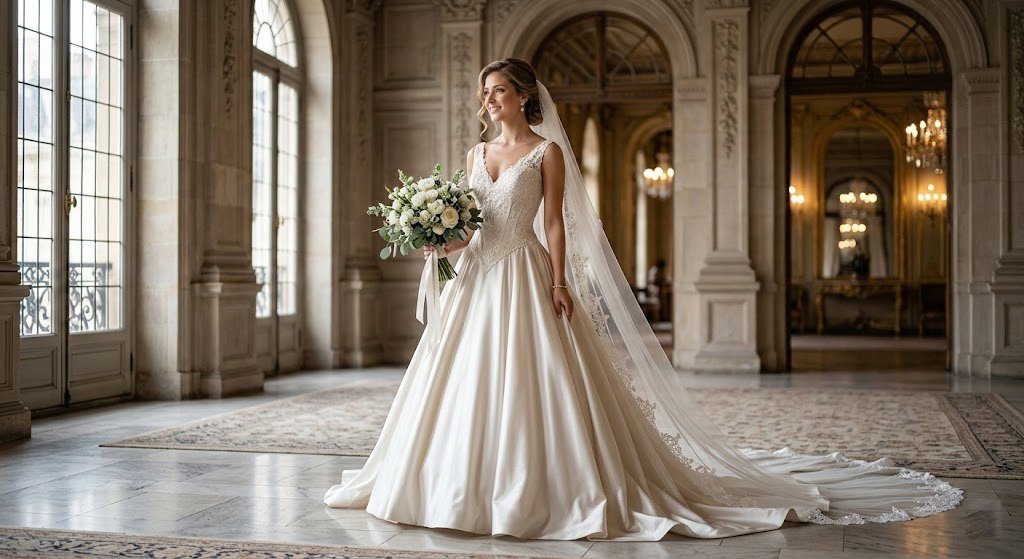
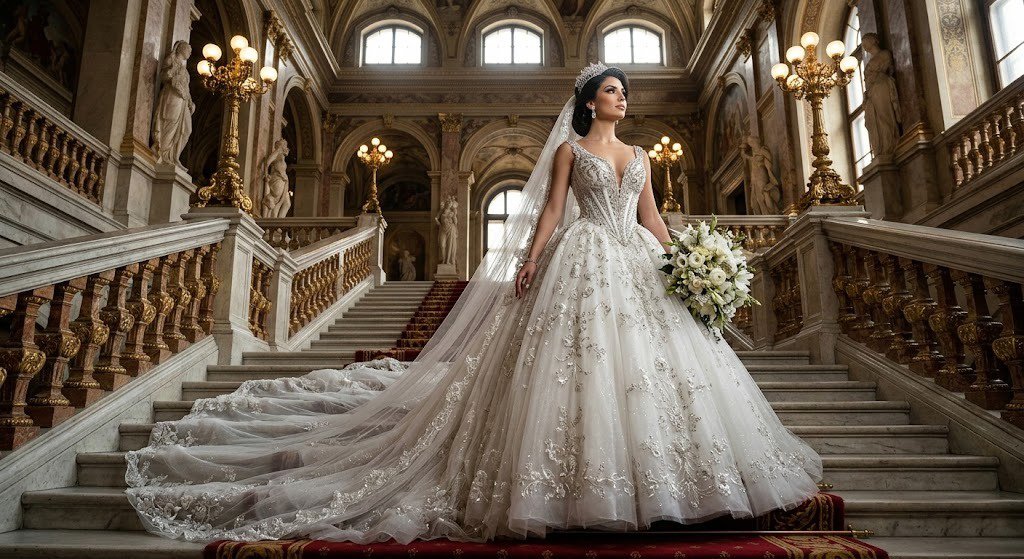
When most people think of a basque waist wedding dress, they envision a grand, royal ballgown. This is the “Cinderella” moment of the bridal world. The structured V-shape of the waist provides the perfect anchor for a massive, voluminous skirt made of layers of tulle or heavy satin.
This style is particularly effective for creating a dramatic contrast. By drawing the eye downward to the point of the “V,” the gown creates an illusion of a much smaller waistline. It is the quintessential choice for a cathedral wedding or a grand ballroom celebration where you want your entrance to be unforgettable.
For 2026, we are seeing these gowns updated with hidden pockets and oversized bows. Designers are moving away from heavy beadwork and focusing instead on the purity of the silhouette. The beauty lies in the architecture of the garment itself, rather than the embellishments.
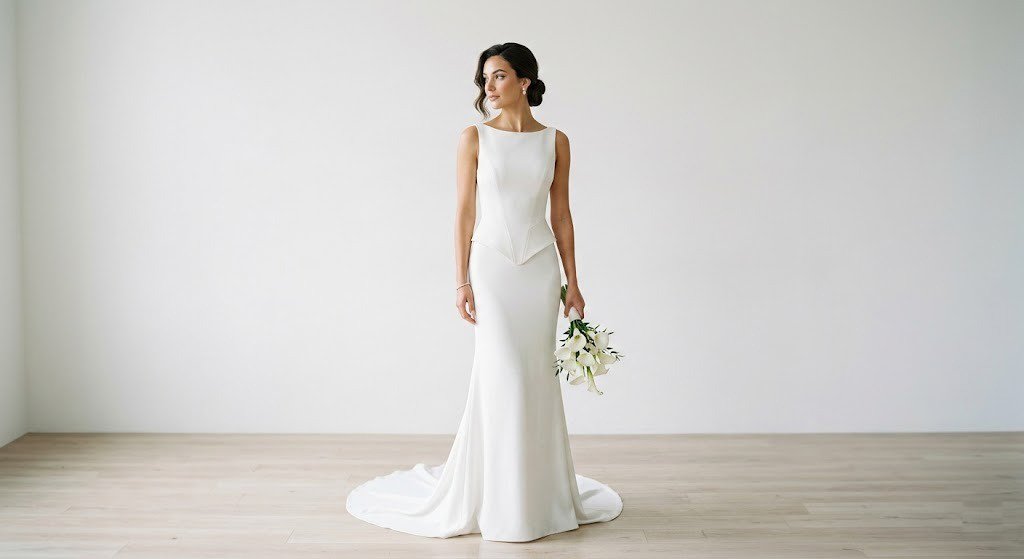
Modern Minimalism: The Sleek Crepe Basque
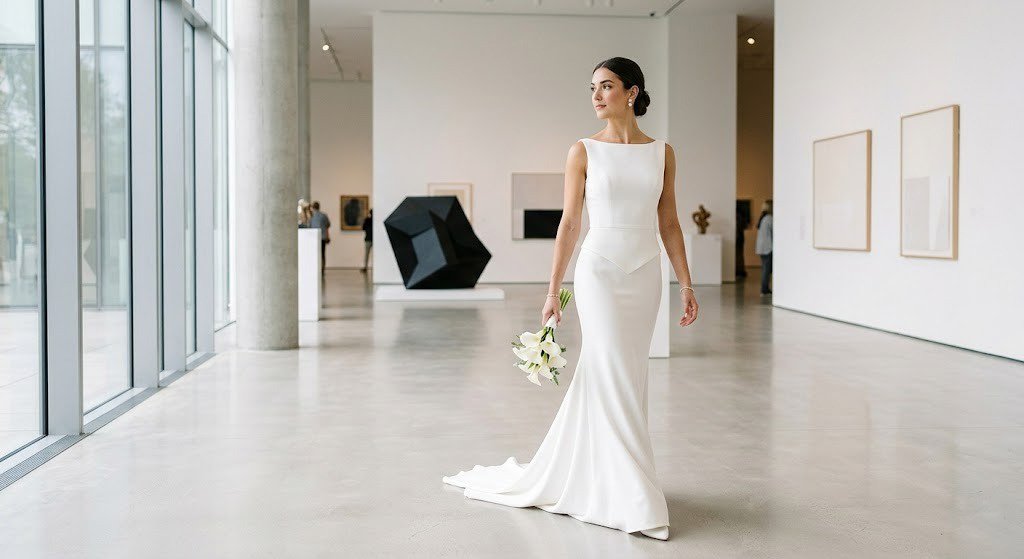
If you prefer a “less is more” approach, you might be surprised to find that the basque waist wedding dress works beautifully with minimalist fabrics like crepe or silk mikado. In these designs, the “V” waistline is often subtle, achieved through clever seamwork rather than a rigid corset.
A minimalist basque gown offers a sophisticated edge. It feels more like a piece of modern art than a period costume. These dresses often feature square necklines or off-the-shoulder sleeves to balance the downward point of the waist, creating a look that is balanced and statuesque.
Minimalist versions are perfect for city hall weddings or contemporary loft venues. They allow the bride’s natural beauty to take center stage while still providing the structural support that makes a basque waist so desirable. You get the benefit of a sculpted midsection without the “pouf” of a traditional ballgown.
Romantic Lace: The Ethereal Basque Silhouette
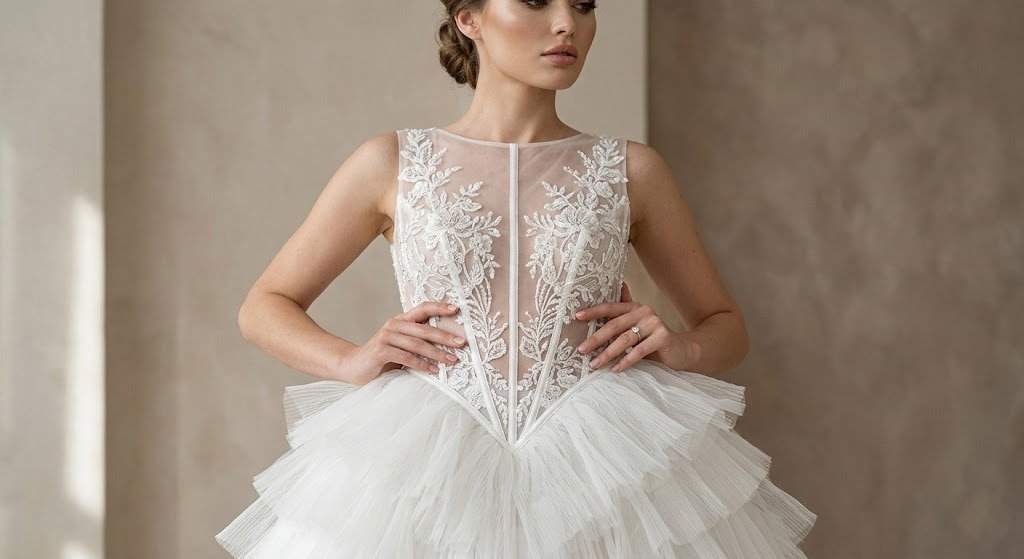
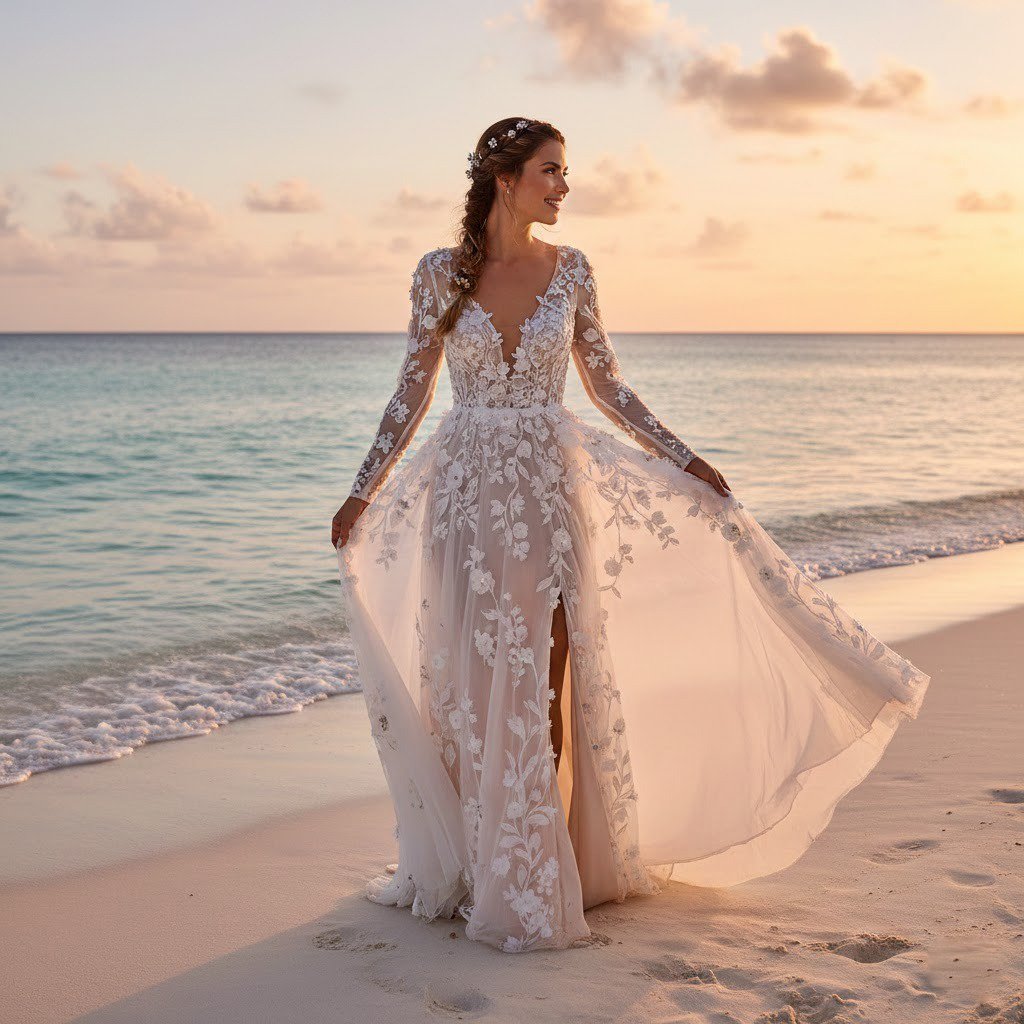
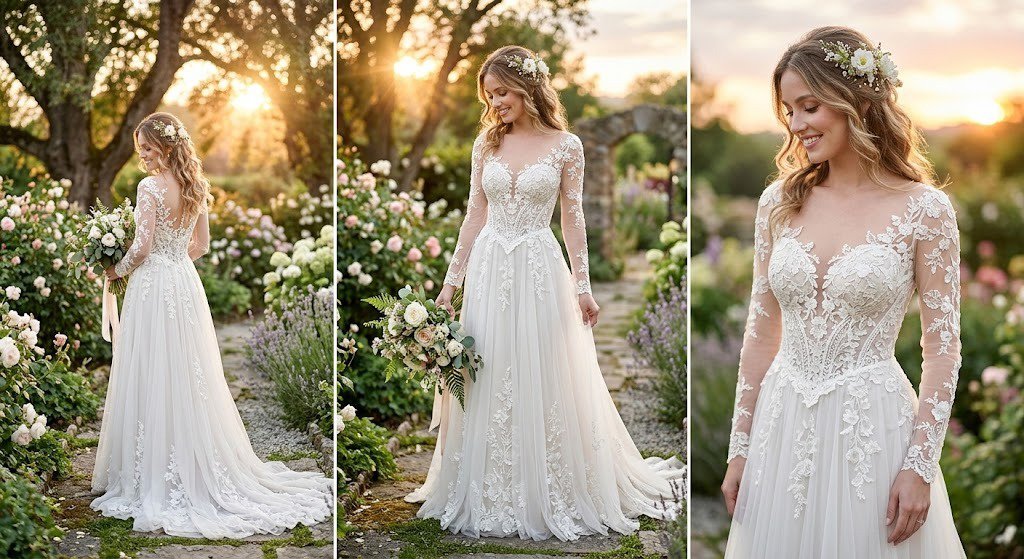
For the bohemian or romantic bride, a lace basque waist wedding dress offers a softer take on the trend. Instead of sharp, rigid lines, these gowns use delicate floral appliqués to define the waistline. The transition from the bodice to the skirt is often blurred by cascading lace, which creates a whimsical, garden-ready vibe.
Lace basque gowns often feature “dropped” waists, where the V-shape is less pronounced but still provides that signature elongated look. These are often paired with sheer “exposed boning” in the bodice, blending the corset trend with the basque silhouette for a double-duty fashion statement.
When choosing a lace version, look for French Chantilly or 3D floral lace. These fabrics add texture and depth, making the gown look like it was spun from a dream. It’s the perfect choice for an outdoor wedding in a vineyard or a historic estate.
The Edgy Alternative: Black Basque Waist Gowns
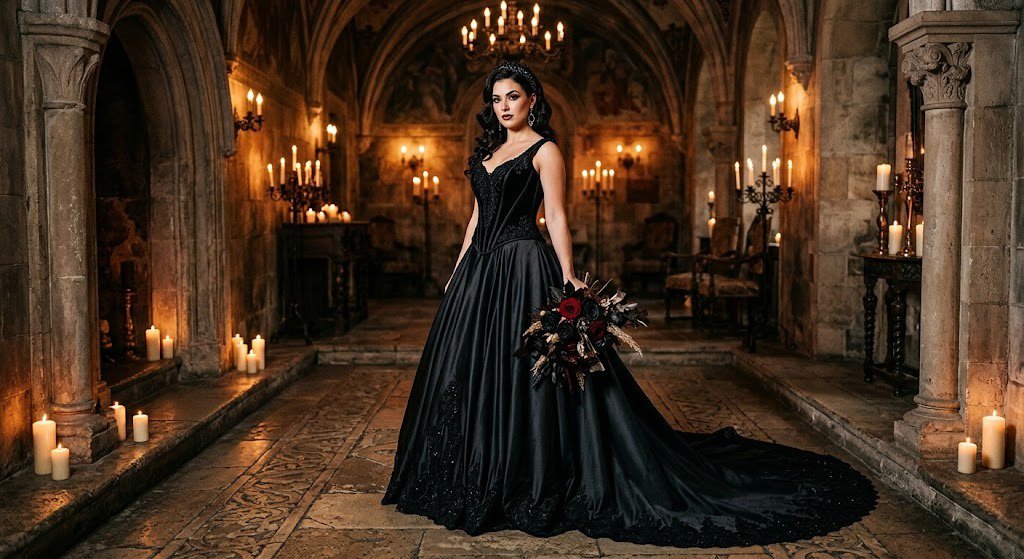
The “Gothic Romance” trend is thriving in 2026, and nothing suits a dark color palette better than a basque waist wedding dress. The inherent drama of the V-shaped waistline perfectly complements the moodiness of a black or deep emerald bridal gown.
Black basque gowns often lean into the Victorian roots of the design. Think high necks, long lace sleeves, and heavy velvet accents. The structure of the basque waist allows the dark fabric to look intentional and high-fashion, preventing the dress from looking too heavy or overwhelming the bride’s frame.
Brides choosing this style are often looking to break tradition while maintaining a sense of formal elegance. It is a powerful style choice that commands attention. Pair it with dark berry-colored lipstick and a simple veil to let the unique waistline do all the talking.
Why the Basque Waist Suits Every Body Type
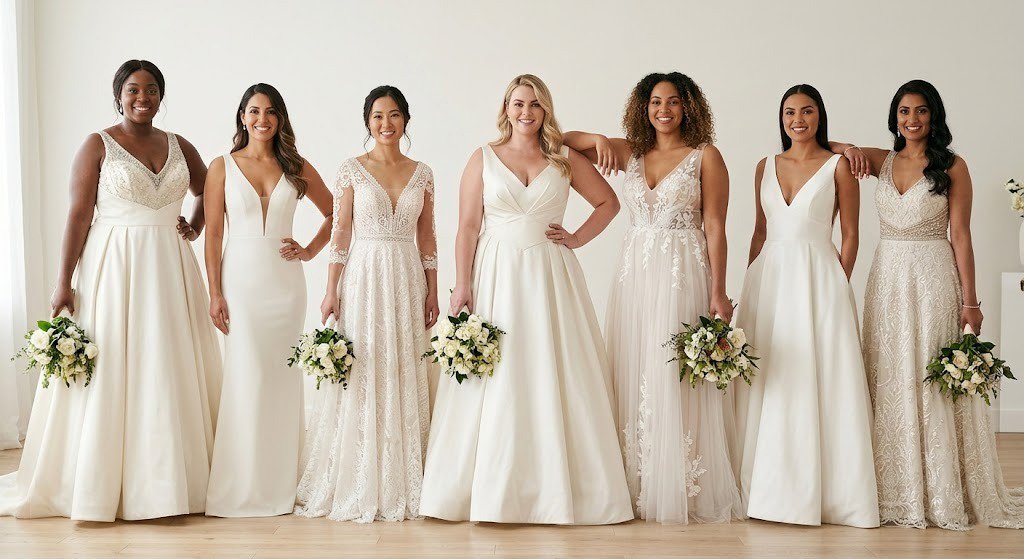
One of the greatest myths in bridal fashion is that the basque waist wedding dress is only for tall, slender models. In reality, it is one of the most inclusive silhouettes available. Because the “V” point draws the eye inward and downward, it creates a vertical line that can make petite brides appear taller.
For pear-shaped brides, the basque waist is a dream. It highlights the narrowest part of the torso and then flares out right where the hips begin, providing a comfortable and flattering fit. It celebrates curves rather than hiding them, providing a structured support system that many other dress styles lack.
Even for those with an athletic or rectangular body type, the basque waist can “create” the illusion of curves. By dipping low in the center, it breaks up the straight line of the torso, giving the appearance of a more defined hourglass figure. It is truly a versatile tool in the bridal wardrobe.
How to Style Your Basque Waist Gown
Styling a basque waist wedding dress requires a bit of strategy to ensure you don’t overwhelm the unique cut of the bodice. Since the waistline is the star of the show, you want to avoid accessories that cut across the middle of your body.
- Avoid Belts: Adding a horizontal belt can “cancel out” the lengthening effect of the V-shape. If you want sparkle, look for a gown with beading already integrated into the waist seam.
- Choose the Right Jewelry: Since the bodice is often structured and high, drop earrings or a simple pendant work best. You want to keep the “V” theme going upward toward your face.
- Consider Your Veil: A cathedral-length veil looks stunning with a basque ballgown, as it mimics the dramatic lines of the skirt. For a minimalist basque, a shoulder-length blusher adds a touch of modern chic.
When it comes to shoes, remember that the dropped waist can sometimes make the skirt appear shorter in the front than a natural waist gown. Be sure to bring your wedding shoes to every fitting to ensure the hemline is perfectly calibrated to the point of your waist.
The return of the basque waist wedding dress is a celebration of craftsmanship and femininity. It offers a bridge between the historical romance of the past and the bold, confident aesthetic of the modern bride. If you are looking for a gown that provides structure, drama, and a flattering fit, this is the silhouette to watch.