
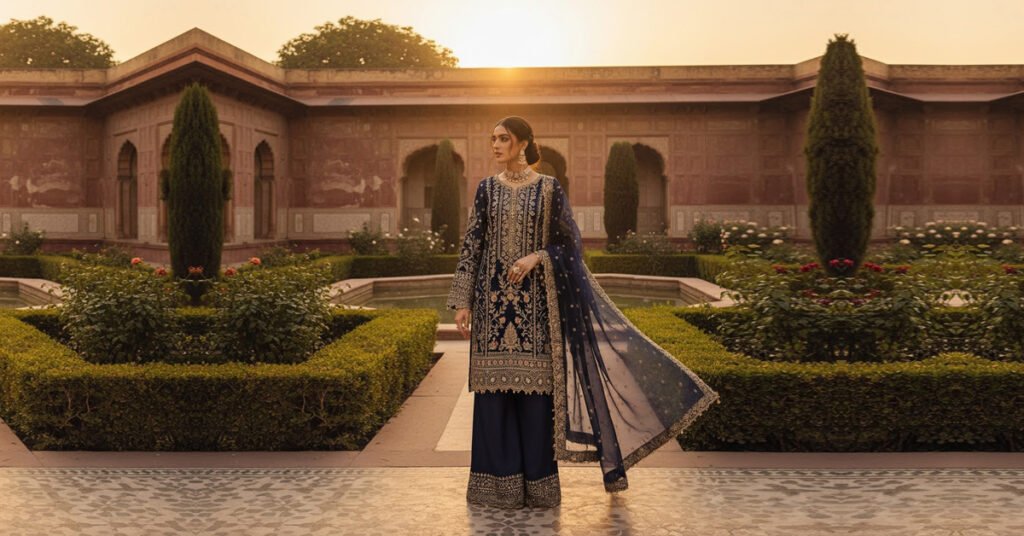
Few garments possess the timeless grace and cultural significance of the Pakistani salwar kameez. More than just an outfit, this iconic ensemble is the national dress of Pakistan, a symbol of identity that has journeyed through centuries of history, blending royal elegance with everyday comfort. It is a wardrobe staple that effortlessly transitions from a simple, breathable daily wear to a heavily embellished, show-stopping ensemble for the grandest occasions.
The visual appeal of the Pakistani salwar kameez is unparalleled. From the rich jewel tones of a festive velvet ensemble to the delicate pastel embroidery of a summer lawn suit, the outfit acts as a canvas for the country’s rich textile heritage. The elegance of the long tunic paired with the flowing or tailored trousers, often completed by a gracefully draped dupatta, creates a silhouette that is both modest and supremely stylish. This blend of tradition and high fashion is why it continues to captivate hearts globally.
The Rich History and Cultural Identity
The history of the salwar kameez is deeply interwoven with the fabric of South Asian culture, tracing its origins back to the Mughal era in the 16th century. Introduced as a comfortable yet regal attire, it quickly became a favourite among the nobility. Over centuries, it was adopted by the masses, evolving with regional influences until it was officially cemented as the national dress after Pakistan’s independence in 1947, symbolising national pride and identity.
Regional Variations: A Tapestry of Styles
Pakistan’s diverse provinces each contribute a unique flavour to the general silhouette of the Pakistani salwar kameez, creating a rich variety of cuts and embellishments. These regional styles ensure that the attire remains a dynamic and ever-evolving fashion statement.
- Punjabi Style: This is often the most colourful and celebratory style, featuring the voluminous Patiala salwar with its multiple pleats, paired with a shorter, straight-cut kameez. The embroidery is typically bold and vibrant.
- Sindhi Style: Known for its vibrant use of Ajrak prints and intricate mirror work (Abla embroidery). The silhouette can be loose and breezy, ideal for the warm climate of the region, showcasing the local artisan skills.
- Balochi Style: Characterised by a very wide, baggy salwar paired with a long, heavily-embroidered kameez. The needlework is painstakingly detailed, often covering large portions of the shirt, making it one of the most distinctive and highly valued styles.
- Pashtun/Khyber Pakhtunkhwa Style: This style leans towards simplicity and functionality, with a very loose-fitting, straight-cut Peshawari shalwar and a long kameez. Embroidery, when present, is often subtle but precise.
Latest Ladies Salwar Kameez Trends 2025
Contemporary Pakistani fashion has masterfully fused traditional craftsmanship with global trends, giving rise to chic new silhouettes and style elements. The latest ladies salwar kameez trends 2025 are all about blending comfort with luxurious detailing, offering a versatile collection for every kind of event.
Modern Silhouettes: Beyond the Classic Cut
The traditional loose salwar is increasingly being replaced or complemented by modern trouser styles that offer a sharper, more tailored look.
- Cigarette Pants: These slim, tailored trousers have become the default bottom wear for a sophisticated, semi-formal look. Paired with a mid-length or long kameez, they create a sleek vertical line that flatters nearly every body type.
- Palazzo Suits: Offering comfort and dramatic flair, wide-legged palazzo pants are a staple for both casual and festive wear. They look best with shorter, structured kameez tops that balance the volume of the trousers.
- Sharara and Gharara: These flared, multi-tiered trousers have experienced a major revival. A sharara flares from the knee, while a gharara flares from below the knee. They are the quintessential choice for weddings and grand festive occasions, often paired with heavily embroidered short or long kurtas.
Fabrics and Embellishments of the Season
Fabric choice is crucial in Pakistani fashion, dictating the formality and comfort of the outfit. For 2025, there is a clear distinction between luxury fabrics for occasion wear and light, breathable materials for daily fashion.
- Luxury Wear: Organza, raw silk, and velvet dominate formal collections. Organza, in particular, is trending for dupattas, adding sheer volume and an ethereal quality to the outfit. Embellishments feature intricate zari work, delicate sequin and bead sprays, and mukaish (silver or gold metallic thread work).
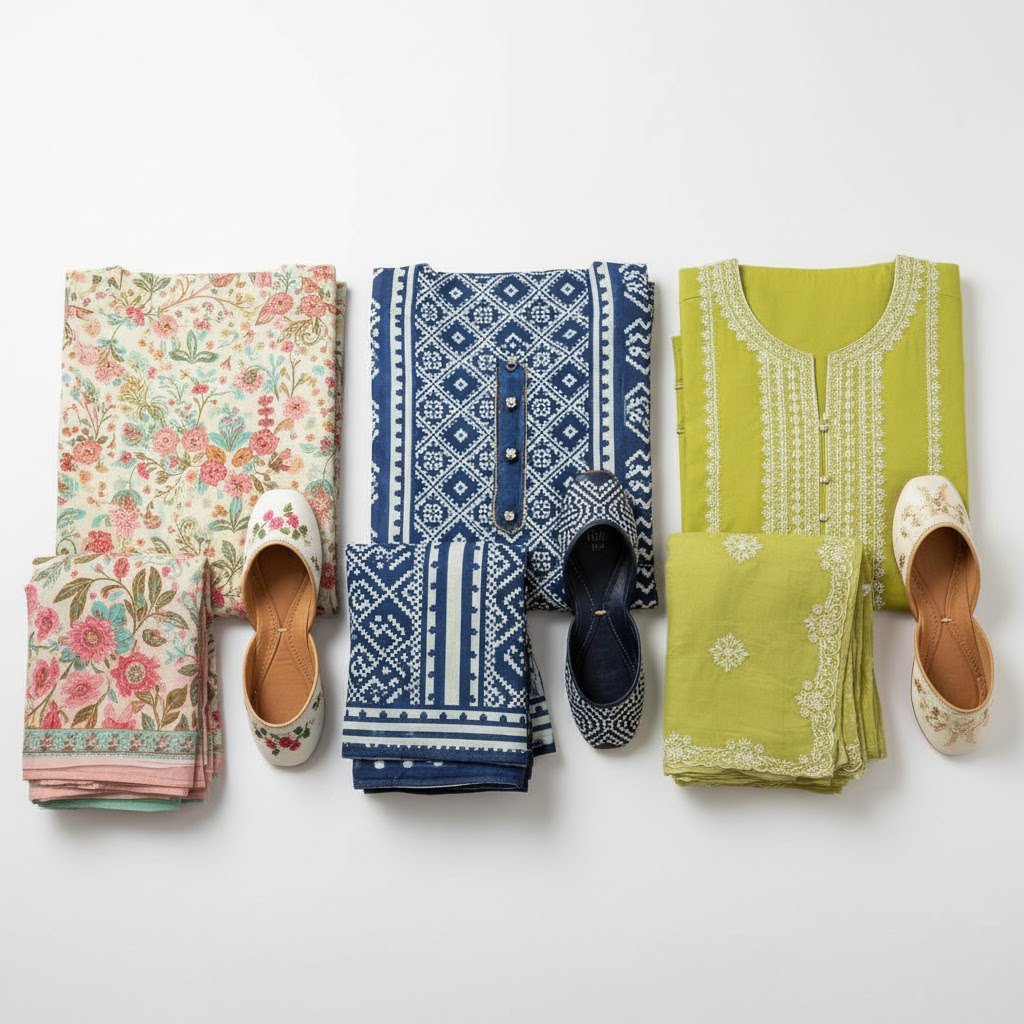
- Casual Wear: Pakistani Lawn Suits Online Shopping: The summer season sees the high demand for lawn fabric. Lawn is a premium, high-thread-count cotton, known for its breathability and cool texture. Pakistani lawn suits online shopping has become a phenomenon, with brands launching collections featuring digital prints, block prints, and light embroidery in vibrant colours. These are the perfect blend of style and practicality for the hot South Asian climate.
A Style Guide for Every Occasion
The versatility of the Pakistani salwar kameez means it can be styled appropriately for almost any event, from a business meeting to a black-tie wedding reception. The key is in the choice of fabric, embellishment, and how the dupatta is draped.
Casual and Day Wear
For running errands or office wear, opt for comfort and minimalism.
- The Look: Choose breathable fabrics like cotton, lawn, or linen. Straight-cut kameez or simple A-line kurtas paired with straight pants or simple salwars are ideal.
- Colour Palette: Pastels (mint green, blush pink, lavender) and solid colours are preferred. Small, subtle prints or light threadwork on the neckline and sleeves keep the look clean.
- Styling Tip: Drape the dupatta casually over one shoulder or wear it loosely folded around the neck like a scarf. Pair with simple flats, pumps, or traditional khussas.
Semi-Formal and Festive Events
For Eid gatherings, dinner parties, or family functions, you can introduce richer fabrics and more significant detail.
- The Look: Medium-weight silk, chiffon, or georgette are excellent choices. Consider a long, floor-length Anarkali or a modern suit with a jacket-style overlay.
- Embellishment: Look for medium-density embroidery, such as Gota work, light mirror work, or delicate floral tilla (metallic thread) embroidery on the kameez hem and sleeves.
- Styling Tip: Drape the dupatta in neat pleats over the chest and pin it on both shoulders for a sophisticated, structured look. Accessorise with statement earrings and a stack of bangles.
Grand Weddings and Designer Pakistani Suits for Weddings
For the ultimate formal statement, such as a bridal or heavy wedding guest look, nothing compares to the grandeur of designer Pakistani suits for weddings. This category represents the pinnacle of Pakistani haute couture.
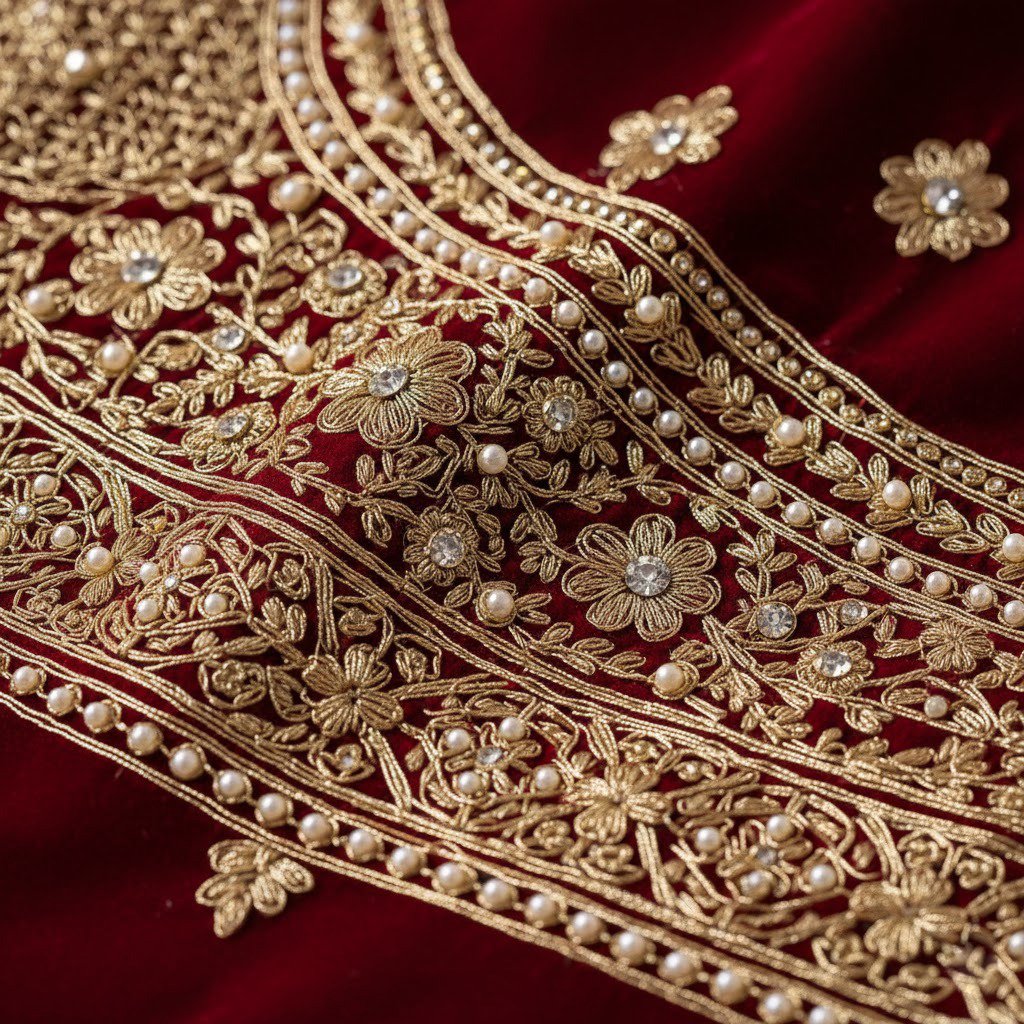
- The Look: The focus shifts to luxurious fabrics like pure velvet, heavy silk, or fully embroidered net. The silhouette is often a Gharara or a long, flowing kameez (frock-style) with a deep, dramatic neckline.
- Embellishment: Heavy, intricate embroidery dominates, including Zardozi (gold thread work), Dabka (spring-like thread work), and stone/crystal embellishments. The dupatta is also a masterpiece, often featuring heavy borders and a central floral motif.
- Styling Tip: For a traditional look, pin the dupatta high on the head. For a modern, regal look, let one corner sweep dramatically over the wrist and drape the rest across the opposite shoulder, showcasing the ensemble’s full detail. Choose elaborate Kundan or Polki jewellery and elegant high heels to complete the royal ensemble.
Maintaining the Elegance of Your Salwar Kameez
Proper care ensures that the beauty of your Pakistani salwar kameez lasts for years. Heavy, embroidered pieces should always be dry cleaned, as water can damage delicate threadwork and embellishments. Lawn and cotton suits can be hand-washed with a gentle detergent to preserve the print and fabric softness. Always store heavily embellished suits flat in a breathable cloth bag to prevent damage from hangers. By respecting the craftsmanship and history of this beautiful garment, you keep its elegance alive.
The Pakistani salwar kameez is a triumph of comfort, tradition, and modern aesthetics. Its ability to adapt to new trends while holding fast to its cultural roots is why it continues to be a cherished attire not just in Pakistan, but by fashion enthusiasts across the globe.

